
Twin Pregnancy Scan two babies. one focused assessment.
A dedicated ultrasound for twin pregnancy, tailored to gestation and your main clinical question — from early viability and twin type to later wellbeing, fluid and growth observations.
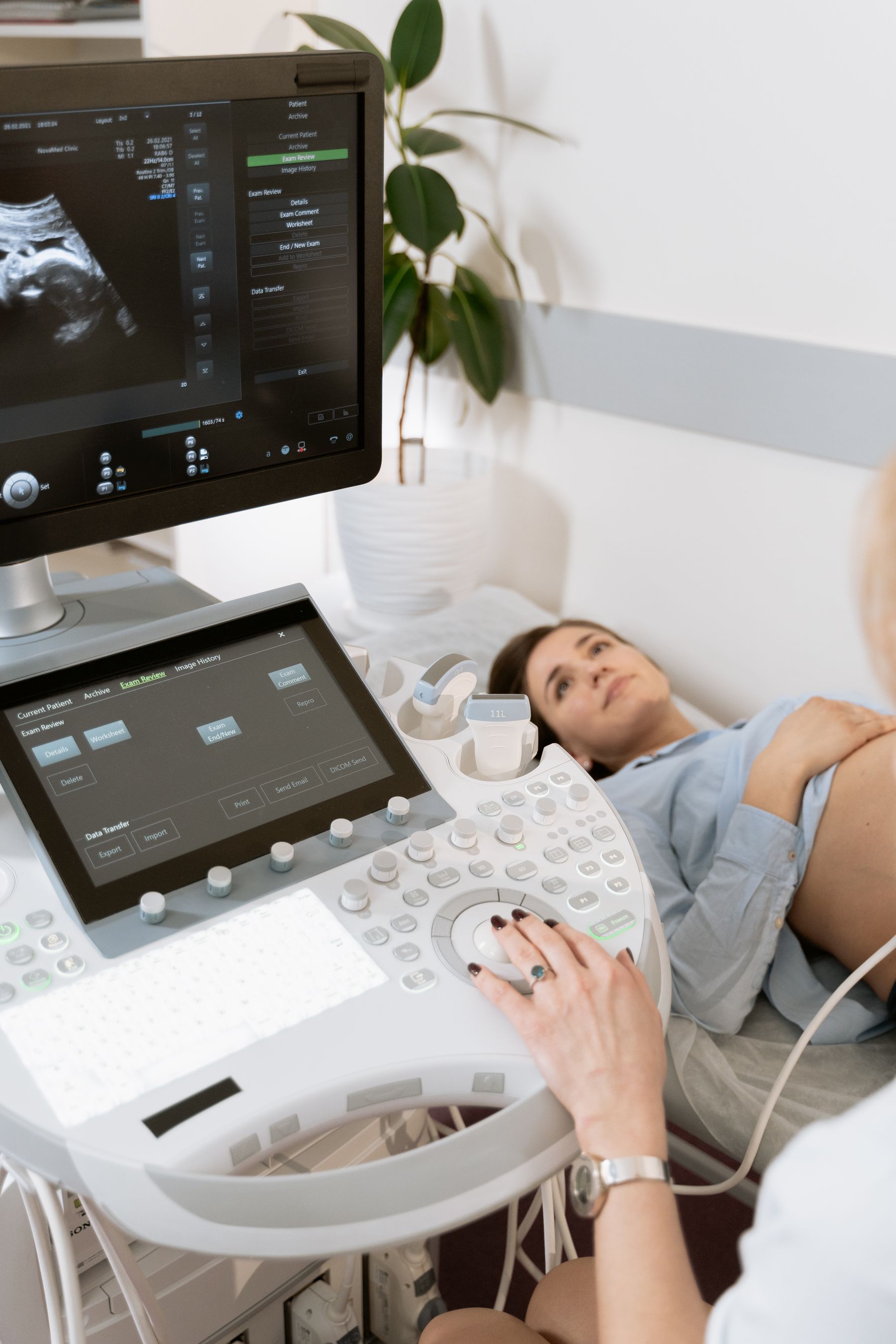
Dedicated twin assessment with clear pricing.
Tunbridge Wells and Orpington are £160. Canary Wharf is £200 and uses its dedicated London booking route.
Tunbridge Wells & Orpington
Private Twin Pregnancy Scan tailored to gestation and indication.
- Assessment of both fetuses
- Chorionicity / amnionicity where visible
- Wellbeing, placenta and fluid observations
- Same-day digital report and images
Canary Wharf
Private Twin Pregnancy Scan at our Canary Wharf clinic in London E14.
- Dedicated Canary Wharf booking route
- Assessment of each twin
- Twin type and pregnancy wellbeing review
- Same-day digital report and images
What we assess in a twin pregnancy.
The exact scan is tailored to gestation. Early pregnancy questions differ from later twin surveillance, so each fetus is assessed individually and the findings are interpreted within the twin-pregnancy context.
Viability of each fetus
Cardiac activity and visible fetal development are assessed separately for Twin A and Twin B where appropriate.
Number of sacs & embryos
Early pregnancy imaging documents the number of gestational sacs and embryos seen.
Chorionicity
Where visible, we assess whether the twins appear to share a placenta or have separate placentas.
Amnionicity
The relationship of the amniotic sacs is assessed where technically possible.
Placenta & fluid
Placental appearances and the fluid around each baby are reviewed where appropriate to gestation.
Growth & position later on
Later in pregnancy, separate fetal measurements and positions can be documented and compared where this is within the scope of the scan.
Why chorionicity and amnionicity matter.
Twin pregnancies are not all the same. Whether the babies share a placenta and/or amniotic sac affects the risks associated with the pregnancy and the type of surveillance recommended.
The scan evolves as the pregnancy progresses.
A twin scan should answer the question relevant to that stage of pregnancy rather than repeat the same checklist at every gestation.
Location & viability
Number of sacs, embryos, cardiac activity, early measurements and twin-type features where visible.
Twin type
Chorionicity and amnionicity can often be documented more confidently earlier in pregnancy.
Anatomy & placental context
Each fetus is considered individually, while placental arrangement and twin type remain clinically important.
Growth & wellbeing
Separate measurements, fetal position, fluid and growth comparison may be assessed depending on the scan booked.
Bring the information that helps us interpret both babies.
If this is not your first twin scan, previous reports can be particularly useful because chorionicity, previous measurements and any existing NHS surveillance plan provide important context.
Private reassurance alongside specialist twin care.
Twin pregnancy carries additional complexity, particularly when the twins share a placenta. A private scan can add information and reassurance, but specialist surveillance remains essential when indicated.
What this scan can provide
Individual assessment of both babies, twin-type information where visible, and gestation-appropriate observations of viability, placentas, fluid, position and growth.
What it does not replace
Your NHS twin-pregnancy surveillance schedule, specialist fetal medicine review, TTTS surveillance, formal serial growth monitoring, Doppler surveillance or maternity triage where these are clinically indicated.
Both babies documented clearly.
Your Sonographer explains the findings for each fetus separately, as well as the twin-pregnancy features relevant to the gestation.
Heavy bleeding, severe or worsening abdominal pain, leaking fluid, regular contractions when not expected, reduced or changed fetal movements later in pregnancy, fainting, fever or feeling acutely unwell require appropriate NHS maternity assessment.
Detailed answers before you book.
Common questions about twin type, chorionicity, amnionicity, growth comparison, TTTS surveillance, reporting and the role of private ultrasound alongside NHS twin care.
What is a Twin Pregnancy Scan?
How much is the Twin Pregnancy Scan?
When can I book a twin pregnancy scan?
Can you tell whether the twins share a placenta?
What is amnionicity?
Why does chorionicity matter?
Can the scan confirm both babies have heartbeats?
Can you measure both babies?
Can the scan assess growth discordance?
Does the scan check the placentas and amniotic fluid?
Does this scan screen for twin-to-twin transfusion syndrome (TTTS)?
Can this scan replace my NHS twin-pregnancy appointments?
Will I receive a report and images?
Do I need a referral?
When should I contact maternity triage rather than book a private scan?
Continue your pregnancy imaging pathway.
Twin pregnancy information from UKSONO.
Understanding Chorionicity
Learn why shared or separate placentas matter and why twin type is best documented early.
Browse pregnancy guides →Why Twin Pregnancies Need Different Follow-Up
Understand why surveillance frequency depends on chorionicity and individual pregnancy risk.
Browse health articles →Growth Differences Between Twins
Read about separate fetal measurements and why serial NHS growth surveillance may be required.
Browse pregnancy guides →Which Pregnancy Scan Happens When?
Explore early pregnancy, anatomy, growth, Doppler and other pregnancy scan options.
View pregnancy scan options →What Our Patients Say
Book your twin pregnancy assessment.
£160 at Tunbridge Wells or Orpington · £200 at Canary Wharf · Same-day digital report.