
Ankle Brachial Index (ABI / ABPI) Doppler Scan in Kent & London | UKSONO Healthcare

Private Ankle Brachial Index Doppler scan, ABPI scan, ABI test, peripheral arterial disease screening, circulation test for the legs, vascular Doppler scan in Kent and London, UKSONO Healthcare.

Private Vascular Doppler Scan • Kent & London

Ankle Brachial Index (ABI / ABPI) Doppler Scan

A private Ankle Brachial Index test is a quick, non-invasive way to assess blood flow to the legs and help screen for Peripheral Arterial Disease (PAD). The test compares blood pressure at the ankle and the arm using Doppler ultrasound, helping identify possible arterial narrowing or blockage.

15–20 mins Typical appointment
Non-invasive No injections or radiation
Same-day result Clear written report

Useful for leg pain on walking, cold feet, circulation concerns, diabetes, smoking history, high cholesterol, hypertension, or vascular risk assessment.
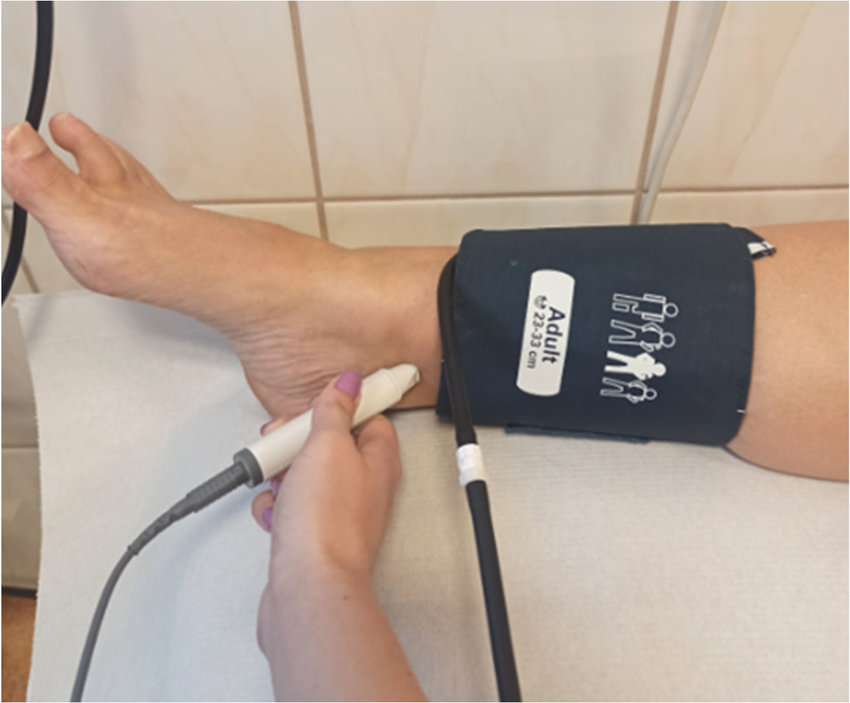
Ankle Brachial Index Doppler measurement being performed

A focused circulation test for the legs

Private ABI / ABPI Doppler scan

Book your Ankle Brachial Index scan

A private Doppler-based blood pressure comparison between the arm and ankle to help assess leg artery circulation and screen for possible Peripheral Arterial Disease.

  • Blood pressure cuff measurements from the arm and ankles
  • Doppler assessment to detect arterial signals accurately
  • ABI / ABPI numerical index calculation
  • Same-day report with explanation
  • No GP referral required

Who may benefit from an ABI / ABPI scan?

Common reasons patients book this private test.

Symptoms in the legs or feet

  • Leg pain or cramping when walking
  • Cold feet or toes
  • Numbness or colour change
  • Slow-healing wounds

Higher vascular risk

  • Diabetes
  • Smoking history
  • High cholesterol
  • High blood pressure

Monitoring or reassurance

  • Known circulation concerns
  • Follow-up after previous vascular treatment
  • Family history of vascular disease
  • Wanting a private circulation check

What happens during the ABI / ABPI scan?

A calm, simple appointment from start to finish.

1. You lie comfortably on the couch

The test is performed with you resting flat so that blood pressure readings can be measured accurately.

2. Blood pressure cuffs are applied

A cuff is used on the arm and then at the ankles to compare pressures between the upper and lower limbs.

3. Doppler is used to locate blood flow

A hand-held Doppler probe helps detect arterial blood flow and improve the accuracy of the pressure reading.

4. Your ABI / ABPI result is calculated

The ankle reading is compared with the arm reading to produce your Ankle Brachial Index value.

How ABI / ABPI results are commonly interpreted

Your result is interpreted alongside your symptoms and clinical history. These ranges are a guide, not a diagnosis on their own.

1.0 – 1.3 Usually considered within the normal range.
0.9 – 1.0 Borderline or acceptable, depending on symptoms and risk factors.
0.4 – 0.9 May suggest mild to moderate arterial disease.
Below 0.4 May suggest severe arterial reduction and may need urgent clinical review.
Important: ABI / ABPI is a screening and assessment tool. A low or abnormal value does not replace a full clinical review, but it can be very important in deciding what should happen next.

Why choose UKSONO Healthcare?

A cleaner private patient experience with clear reporting and fast access.

Patient-friendly service

Clear explanations, calm appointments and a report you can understand and share if needed.

Private access

No GP referral required. Book directly and choose a convenient time online.

Fast reporting

Same-day results, helping you move quickly to the next step if further review is needed.

Book your ABI / ABPI scan today

If you have symptoms of poor leg circulation or want a private PAD screening test, book online below.

Book your Ankle Brachial Index (ABI / ABPI) Doppler scan

Please select an appointment time below to continue with your booking.

ABI / ABPI Doppler Scan Booking Calendar
If you need help choosing a time, please contact the clinic directly.
Open in new window

20 Frequently Asked Questions

Written clearly for patients considering a private ABI / ABPI Doppler scan.

1) What is an Ankle Brachial Index (ABI / ABPI) scan?
It is a non-invasive circulation test that compares blood pressure at the ankle and the arm to assess how well blood is reaching the legs.
2) What does ABI stand for?
ABI stands for Ankle Brachial Index. ABPI means Ankle Brachial Pressure Index. They are commonly used to describe the same test.
3) What is this test used for?
It is mainly used to help screen for Peripheral Arterial Disease (PAD), where the arteries to the legs become narrowed.
4) What is Peripheral Arterial Disease (PAD)?
PAD is a condition in which blood flow to the legs is reduced because the arteries are narrowed or blocked, often by atherosclerosis.
5) What symptoms might suggest I need an ABI / ABPI test?
Common reasons include leg pain when walking, calf cramping, cold feet, poor wound healing, numbness, or known circulation concerns.
6) Do I need a GP referral?
No. You can book privately without a GP referral.
7) Is the ABI / ABPI scan painful?
It is usually not painful. You may feel some pressure when the cuffs inflate, similar to a standard blood pressure check.
8) Does the test involve radiation?
No. It uses Doppler ultrasound and blood pressure cuffs, not x-rays.
9) How long does the test take?
Most ABI / ABPI appointments take around 15 to 20 minutes.
10) Do I need any preparation before the scan?
Usually no special preparation is needed. Wearing loose, comfortable clothing can be helpful.
11) Will I have to remove clothing?
You may need access to the lower legs and arms so that cuffs can be applied properly.
12) Who is most at risk of PAD?
People with diabetes, smoking history, high cholesterol, high blood pressure, known vascular disease, or increasing age may have a higher risk.
13) Is ABI / ABPI suitable if I have diabetes?
Yes, it is commonly requested in patients with diabetes, although in some people with calcified arteries, further vascular testing may also be needed.
14) What does a low ABI / ABPI value mean?
A low result may suggest reduced blood flow to the legs and possible Peripheral Arterial Disease.
15) Can I walk or drive after the test?
Yes. The test is non-invasive and you can usually return to normal activities straight away.
16) When will I get my results?
In most cases, results are available on the same day with a clear written report.
17) What happens if my result is abnormal?
The report may recommend GP review, vascular specialist assessment, or additional imaging depending on the severity and your symptoms.
18) Is this scan enough on its own to diagnose every circulation problem?
No. ABI / ABPI is a very useful screening and assessment tool, but some patients may need additional vascular ultrasound or specialist review.
19) Which clinic locations offer this service?
UKSONO Healthcare offers private appointments in Tunbridge Wells, Orpington and Central London.
20) Why book privately with UKSONO Healthcare?
Patients choose UKSONO for fast access, a clean and calm private experience, same-day reporting, and a straightforward online booking process.
ABI / ABPI Doppler Scan • Book online now Book appointment

What Our Patients Say